














TS Metals
Mill Road West
Rugby
CV21 1BZ
UK
Case studies
Rotor Fault Diagnosis Precision Testing
Our Customer’s Challenge
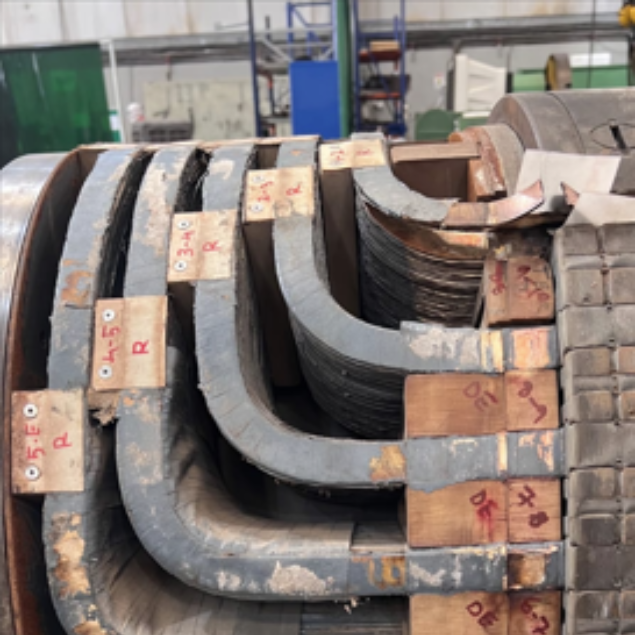
During an on-site routine minor inspection of a 22.6 MVA, 11.5 kV generator, standard tests were conducted, including Insulation Resistance, Impedance, and Recurrent Surge Oscilloscope (RSO) returning satisfactory results. However, an abnormally high rotor winding resistance was recorded, indicating possible hidden coil damage or poor electrical connections. This created uncertainty around rotor integrity and the risk of unplanned downtime. To accurately identify the root cause and prevent potential failure, the rotor was sent to Quartzelec in Abu Dhabi, where expert diagnostics and precise inspection could determine the necessary corrective actions.
The Quartzelec Solution
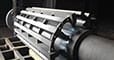
Quartzelec delivered a comprehensive diagnostic and repair solution for the generator rotor. Following detection of abnormal winding resistance, the rotor was dismantled and the retaining ring removed to enable full access to the end-winding region. Detailed inspection, supported by resistance normalisation and pole-to-pole comparison, identified cracking in the first two rotor coils, resulting in partial electrical continuity.
Localised carbonisation from progressive electrical discharge and copper particle migration had reduced dielectric strength and increased contact resistance. Quartzelec recommended complete removal of contaminated insulation, replacement of the damaged coils, reinstatement of correct electrical clearances, re-insulation using approved materials, full mechanical restoration, and comprehensive post-repair electrical testing to confirm rotor integrity and service readiness.
Key Benefits
- Early Fault Detection: Identified hidden rotor coil damage before potential catastrophic failure, helping prevent unplanned downtime
- Expert Diagnostics: Utilised precision measurements and specialised knowledge to pinpoint electrical and mechanical issues accurately
- Informed Decision-Making: Provided detailed inspection results and recommended corrective actions, enabling the client to plan effective repairs
- Reduced Operational Risk: Highlighted potential safety hazards and reliability concerns, supporting proactive maintenance of a critical petroleum industry asset
#UnparalleledInEngineeringServices
Follow us on Facebook, X & LinkedIn
CS112
Connect with us


TS Metals is proud to be accredited by:
